By MV International | 26 August 2026
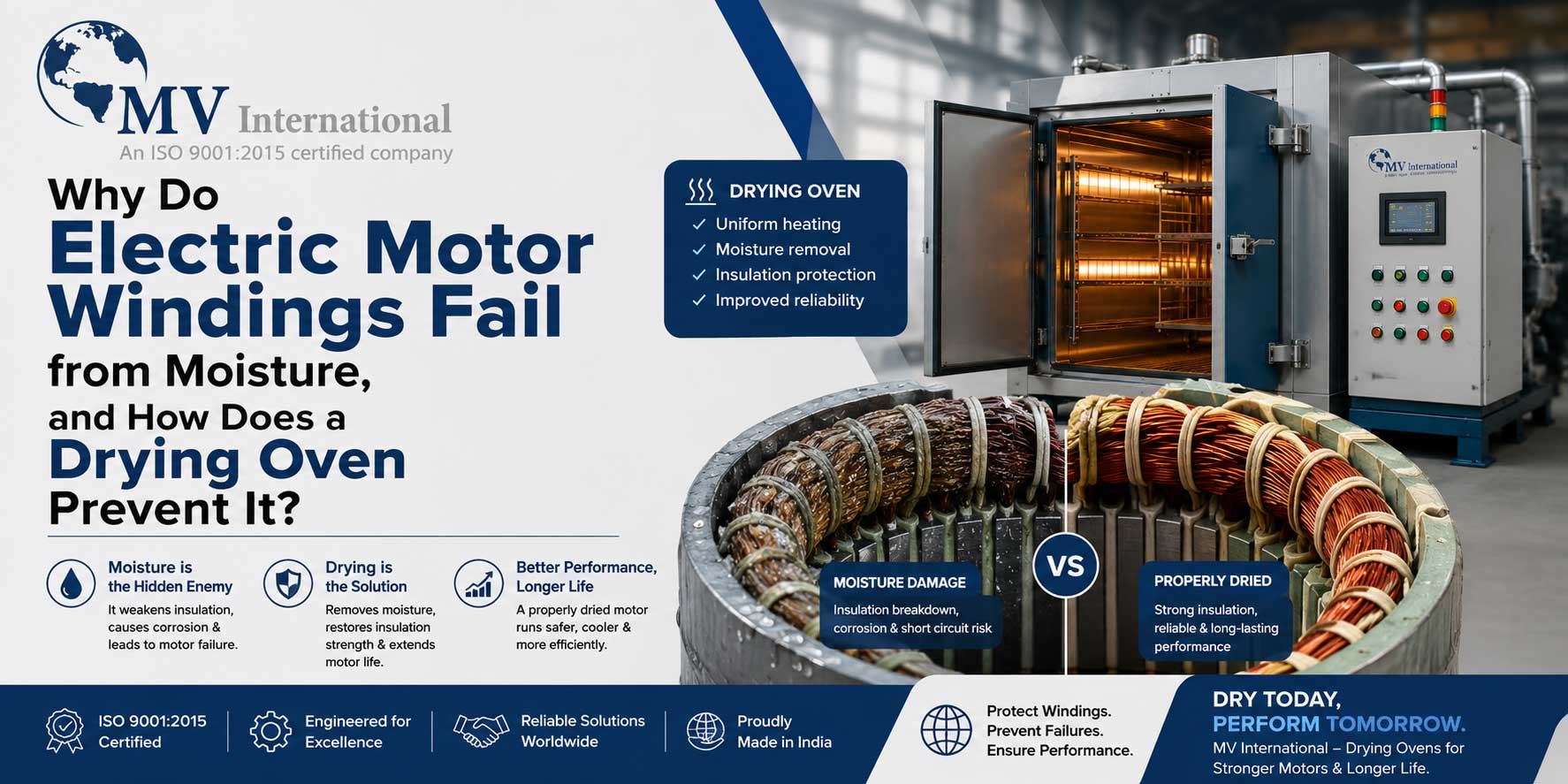
Electric motors fail when trapped moisture compromises the dielectric strength of the winding insulation, leading to early short circuits and electrical grounding. An electric motor drying oven resolves this by applying controlled thermal processing and forced air circulation to evaporate moisture from stators, rotors, and coils. This precise heating process restores insulation resistance, ensures proper impregnation varnish curing, and significantly extends the operational lifespan of industrial motors.
The equipment extracts trapped moisture from electric motor windings, stators, and transformers following rewinding, aqueous washing, or prolonged storage in humid environments. Operating a motor without prior moisture removal severely weakens the insulation class rating, increasing the probability of catastrophic electrical failure and costly downtime.
Moisture directly degrades the electrical insulation encasing copper windings. When motors remain idle, operate in high-humidity zones, or endure seasonal monsoon conditions, water vapor permeates the insulation layers. This reduces the dielectric strength, causing current leakage, grounding faults, and premature winding burnouts when power is applied.
General heating equipment lacks the strict thermal regulation and specialized construction required for sensitive electrical components:
| Specification | Standard Industrial Oven | Electric Motor Drying Oven |
| Interior Construction | Mild steel racks | Heavy-duty stainless steel (resists corrosive varnish fumes) |
| Air Circulation | Basic thermal convection | Forced air circulation for uniform moisture extraction |
| Temperature Control | Standard ON/OFF thermostats | Digital PID controllers to prevent winding degradation |
| Primary Application | General component heating | Moisture removal and epoxy/varnish curing without scorching |
Optimal thermal processing depends on the motor’s physical mass and specific insulation class (e.g., Class F or Class H). Rather than relying on a fixed temperature, operators require programmable PID controllers to execute gradual ramp-up cycles. Rapid, uncontrolled heating causes the winding varnish to blister and permanently damages the internal insulation structure.
Yes. Engineered motor drying ovens execute dual-stage thermal processing. Operators utilize precise digital controls to safely extract moisture at lower temperatures, followed by a controlled temperature increase to bake and cure impregnation varnishes and epoxy resins during the final rewinding process.
Beyond dedicated motor repair and rewinding facilities, continuous manufacturing operations require these thermal systems to maintain facility equipment:
To ensure equipment longevity and thermal accuracy, verify the following engineering parameters with the manufacturer:
Standard-sized ovens accommodate facilities processing uniform, fractional-horsepower motors in low volumes. Custom-engineered ovens are mandatory for high-capacity rewinding shops processing mixed motor sizes, heavy-duty industrial stators, or facilities requiring specialized track-and-trolley loading systems to handle massive payload weights.
Industrial pricing reflects specific engineering configurations rather than generic physical dimensions. Key cost drivers include:
MV International designs and manufactures specialized electric motor drying ovens from its ISO 9001:2008 certified facility. Operating since 1989, the company engineers precision thermal processing equipment for over 1,800 clients across 50 countries, providing tailored solutions based on exact stator dimensions and daily processing capacities.
Request a technical estimate:
Phone: +91 9718290000 / +91 9810245368
Email: mverma@mvinternational.com
Website: mvinternational.com
Copyright © 2026 MV International. All Rights Reserved.