

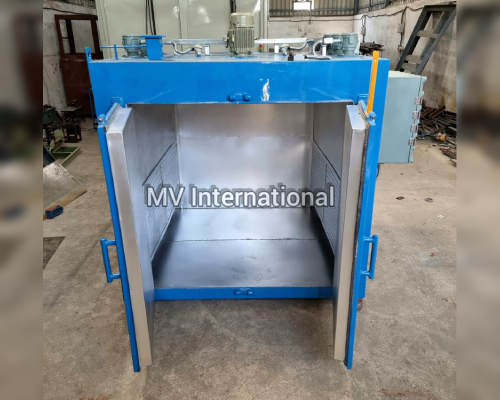
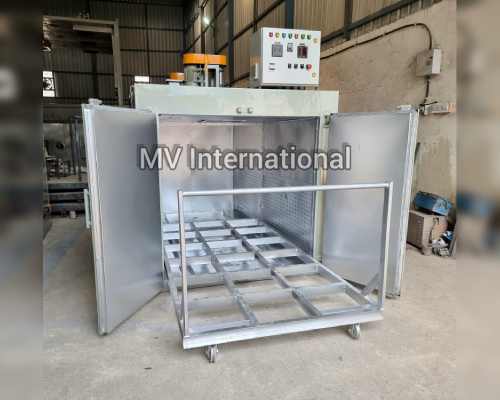
A trusted Drum Heating Oven Manufacturer is essential for industries that rely on heating or melting materials stored in drums. Whether you are working with oils, waxes, adhesives, or chemicals, maintaining consistent temperature control is critical for production efficiency and product quality.
At MV International, we design and manufacture high-performance Drum Heating Oven systems that deliver uniform heat distribution. Our ovens ensure safe and controlled heating, preventing thermal damage, degradation, or localized overheating of materials.
A Drum Heating Oven is specialized industrial equipment used to heat or reduce the viscosity of materials directly inside drums.
Unlike conventional heating methods, these ovens provide:
By using advanced insulation and airflow systems, drum heating ovens maintain stable internal temperatures, ensuring consistent results.
🔹 Efficient Heating Media
🔹 Advanced Airflow System
🔹 Easy Material Handling
Choosing the right drum heating oven manufacturer ensures long-term performance and operational safety.
At MV International, we offer:
As an experienced industrial oven manufacturer, we design solutions tailored to your production capacity, workspace, and heating requirements.
| Feature | Specification |
| Capacity | 1, 2, 4, 8, or 16 Drums |
| Temperature Range | Ambient to 500°C |
| Material | Mild Steel / SS 304 / SS 316 |
| Heating Media | Electric / Gas / Diesel / Steam / Thermic Oil |
| Power Supply | 230V / 415V |
| Airflow | Vertical / Horizontal / Combination |
| Insulation | Ceramic Wool / Mineral Wool |
| Heating Elements | Incoloy / SS Tubular |
| Exhaust System | Manual / Automatic |
Modern industries require automation and precision. Our systems include:
Drum heating ovens are widely used in industries such as:
We provide complete flexibility to meet your operational needs:
A drum heating oven warms sealed or open drums until the contents become fluid enough to pour, pump, or decant. Materials such as bitumen, epoxy resin, wax, grease, glucose, palm oil, and certain adhesives naturally thicken or solidify at ambient temperatures. Heating the drum brings the viscosity down to a workable level without degrading your product.
The old methods of heating are worth addressing directly. Open flames, steam lances, and immersion heaters all heat unevenly. They scorch the material touching the drum wall while the center stays completely solid. Furthermore, in a plant handling flammable stock, they introduce a severe safety risk that nobody wants on the shop floor. A properly built oven heats the entire drum evenly through circulated air. This commitment to safety and quality is exactly why MV International has been a trusted Drum Heating Oven Manufacturer for over three decades.
We design our ovens to accommodate your specific workflow. Our standard configurations include:
Many drummed materials have a very narrow safe temperature window. If you push a resin past its threshold, it starts to cure right inside the drum. Overheat a food grade syrup, and it darkens and caramelizes. Take a lubricant too high, and the additive package breaks down completely.
As experienced Drum Heating Oven Manufacturers in India, we set the controller band, the fan position, and the heating element rating against your specific product data sheet. This ensures your material safely reaches pouring temperature and stays there instead of drifting upward and ruining the batch.
If your drum contents give off flammable vapor at operating temperatures, a standard oven is the wrong specification. Flameproof units require Ex rated heaters, sealed junction boxes, purge arrangements, and pressure relief panels. Reliable Drum Heating Oven Suppliers in India will raise this crucial safety point before you place your order, not after. Simply tell us the flash point of your material, and we will tell you exactly which build you need to stay safe and compliant.
Each oven is rigorously tested under load at our Bahadurgarh facility before it leaves our hands. Comprehensive drawings, wiring diagrams, an operating manual, and test certification travel alongside your machine. We also hold spares for the models we build, so a failed element or contactor never turns into a three week wait. Best of all, our engineers stay contactable long after installation. We believe that kind of support matters far more than any brochure claim.
Serving as dedicated Drum Heating Oven Exporters in India, we regularly ship machinery to the Middle East, Southeast Asia, Africa, and Europe. Units are wired specifically for your destination supply, packed securely for sea freight, and fully documented for smooth customs clearance. Where site conditions demand it, we build to your local electrical code rather than assuming Indian practices will pass your local inspection.
Sizing your oven correctly is simple. Send us the material name, its flash point, the number of drums per cycle, your target temperature, and the cycle time you can allow. From that list alone, we can size your unit accurately. Working with a specialist manufacturing partner also means the loading arrangement will suit your existing floor space rather than forcing you to rearrange your facility.
Ready to optimize your material handling? Call +91 9718290000 or write to us at mverma@mvinternational.com.
What materials can a drum heating oven process?
It is designed for heating oils, waxes, adhesives, resins, and chemical compounds without damaging the material.
What sizes are available?
We offer systems that can handle 1 to 16 drums, depending on your production requirements.
How does the oven prevent overheating?
Advanced airflow systems and PID controllers ensure uniform heating and prevent localized burning.
Can the system be automated?
Yes, we offer PLC, HMI, and SCADA integration for fully automated operations.
How does a drum heating oven actually work?
A drum heating oven circulates heated air or transfers heat through a steam jacket around a sealed, insulated chamber holding the drums. Heating elements warm the air, and a blower pushes it through the chamber vertically, horizontally, or in a combination pattern to heat every drum evenly. A PID controller continuously monitors the chamber temperature and adjusts output, ensuring the material warms gradually from the outside in without forming hot spots. Insulated walls retain the heat, while an exhaust system vents fumes and moisture.
What temperature range can a drum heating oven reach?
MV International’s drum heating ovens operate from ambient temperature up to 500°C. Most installations are built around a specific working band (150°C, 250°C, 400°C, or 500°C) matched to the material’s flash point and viscosity requirements. This targeted approach simplifies controls and improves cost-effectiveness compared to units built for maximum capacity. A PID controller with SSR/SCR output maintains an exact temperature.
What’s the difference between a drum heating oven and a drum warming oven?
The primary differences are intensity and purpose. A drum warming oven provides gentler, lower-temperature heat (ambient to 150°C) to prevent freezing or reduce viscosity, allowing thick contents like honey, wax, or bitumen to be pumped. A drum heating oven reaches up to 500°C for demanding processing or melting tasks involving chemicals, adhesives, resins, and industrial oils. A warming oven is the economical choice for making materials pourable, while a heating oven is required for high-temperature precision processing.
Which heating source should I choose: electric, steam, gas, diesel, or thermic oil?
The ideal heating source depends on your facility’s utilities and required temperature precision. Electric models are easy to install and offer accurate control. Steam-heated ovens utilize existing boiler infrastructure and provide gentle heat through a steam jacket, ideal for materials prone to scorching. Gas, diesel, and thermic oil systems deliver high heat output for larger operations and run economically at scale. Choose based on your drum volume, target temperature, and current utility setup.
How many drums can one oven hold at a time?
Standard configurations handle 1, 2, 4, 8, or 16 drums per chamber to match your typical batch size. Larger operations often run multiple smaller units in parallel to maintain uniform airflow and process different materials simultaneously. Custom chambers are available for non-standard drum counts or sizes.
What materials and industries typically use a drum heating oven?
Drum heating ovens safely transform thick, solid, or viscous materials into a workable state without scorching. They are utilized in chemical processing, paints and coatings, adhesives, resins, lubricants, pharmaceuticals, and food processing. Common applications involve heating industrial resins, bitumen, waxes, and heavy lubricants to precise temperatures for pumping, pouring, or mixing.
Can a drum heating oven be used for food-grade or pharmaceutical materials?
Yes, food processing and pharmaceuticals are standard applications. These industries require SS304 or SS316 stainless steel construction for corrosion resistance and sanitation, paired with tight temperature controls and data logging. To ensure regional compliance (such as GMP or food-contact certification), confirm documentation requirements with MV International’s engineering team during the specification process.
Is it safe to heat flammable or solvent-based materials in this oven?
Heating flammable solvents or volatile chemicals requires a flameproof (explosion-proof) oven rather than a standard model. Flameproof units feature explosion-proof heating elements, motors, and control panels rated for hazardous Zone 1 and Zone 2 areas to safely contain sparks. MV International manufactures both standard and flameproof drum heating ovens. Always disclose your material’s flash point and hazard classification to ensure the correct system is quoted.
What safety features come standard with a drum heating oven?
Standard safety features include door interlocks that cut power to the blower and heating elements when opened, PID temperature control to prevent overheating, and an exhaust system to clear fumes. Insulated double-wall construction keeps the exterior cool to protect operators. Optional safety upgrades include audible/visual alarms, illuminated switches, and 24/7 timers for unattended operations.
Can the oven be customized to fit my drum size, chamber layout, or factory floor?
Yes, customization is standard practice. Chamber size, drum capacity, heating media, airflow direction, and door styles are designed around your specific floor plan and production flow. Material handling options include roller beds or floor-loading layouts for forklifts. Providing your drum dimensions, available floor space, and workflow requirements ensures the oven is tailored to your exact needs.
Can the oven be automated with PLC, HMI, or SCADA for data logging?
Yes. In addition to the standard PID controller, you can integrate a PLC with HMI for real-time monitoring and fault alerts, or utilize SCADA to control multiple units centrally. Microprocessor-based temperature recorders log data for compliance audits in pharma, food, and chemical processing. PID controllers store multiple programs, allowing operators to seamlessly switch heating profiles for different materials.
How much maintenance does a drum heating oven need?
Routine maintenance is minimal. Regular tasks include checking door gaskets and seals for wear to prevent heat loss, inspecting the exhaust system for blockages, and calibrating the PID controller and sensors. Heating elements require visual inspections during scheduled downtime, and moving parts need occasional lubrication. Most maintenance issues stem from neglected gasket or airflow checks.
How do I choose the right size and configuration for my business?
Base your choice on your batch size, target temperature, and available on-site utilities. These factors dictate the required capacity, heating media, and construction material. If you anticipate seasonal fluctuations or scaling up, discuss building in extra headroom upfront. Investing in a slightly larger chamber initially is more cost-effective than replacing an undersized unit later.
What should I check before buying a drum heating oven from a manufacturer?
Manufacturers quote based on specific requirements rather than fixed prices. Before buying, verify the manufacturer’s ISO certification, customization capabilities, standard versus optional safety features, after-sales support, and spare parts availability. Requesting reference installations in your specific industry is an excellent way to evaluate real-world reliability.
If you are looking for a reliable Drum Heating Oven Manufacturer, MV International offers customized, high-performance solutions tailored to your industry.
Contact us today to get a quote and enhance your production efficiency with advanced heating technology.
| Capacity available | 1 Drum, 2 Drum, 4 Drum, 8 Drum and 16 Drums |
| Material of construction | Mild Steel, Stainless Steel 304 / 316 or any. |
| Temperature Range | Ambient to 1500C / 2500C / 4000C / 5000C. |
| Air circulation | Vertical, Horizontal or Combination. High Volume and high Velocity Airflow provides twice the air changes compare to ordinary Industrial Ovens. |
| Timer | Digital Pre-Settable with range up to 0 to 999 Minutes / Seconds |
| Paint | Enamel Paint / Epoxy Coating / Powder Coated. |
| Power supply | 230 Volts Single Phase 50Hz / 60Hz 415 Volts 3 Phase 50Hz / 60Hz |
| Heating Elements | Low wattage Incoloy sheathed heating elements / SS Tubular |
| Insulation | Ceramic Wool / Mineral Wool |
| Door Gasket | Fibre Glass Rope (High Temp) / Silicon Gasket. |
| Heavy Duty Shelves / Trays | Made out of angles with wire knitted mesh or perforated sheet suitable for oven internal size will be provided along with the oven. |
| Exhaust Manual or Automatic | Automatic forced exhaust system with fresh air inlet. Manually adjustable damper with fresh air inlet. |
| Heating Media | Electric / Gas / Diesel / Steam / Thermic OIL etc. |
| Temperature Control | PID with or without Profile Setting (Temp Up and Down) can be provided with SSR/ SCR for high accuracy. The programming of PID can vary from 4 to 50 programmes. |
| Temperature Recorder | Microprocessor chip-based paper less, Multi-Stage Temp. Indicator cum Recorder. |
| PLC With HMI | PLC can be provided for automation and integration of whole system, data feeding, process display, and fault indication can be seen in HMI. |
| SCADA System | High quality integration and controlling system from one point can be done with SCADA. |
| Door | A. Door interlocking system will switch off the blower and the heating system if the oven doors are open
B. Doors on both ends |
| Fumes Outlet | Forced exhaust blower |
| Windows and lights | A. Viewing window B. Interior lights and Access ports for calibration C. Oven on switch- Illuminated D. Heat on switch- Illuminated |
| Timer and Alarm | A. 24/7 timer B. Audible/visual alarm indicators |
Copyright © 2026 MV International. All Rights Reserved.
