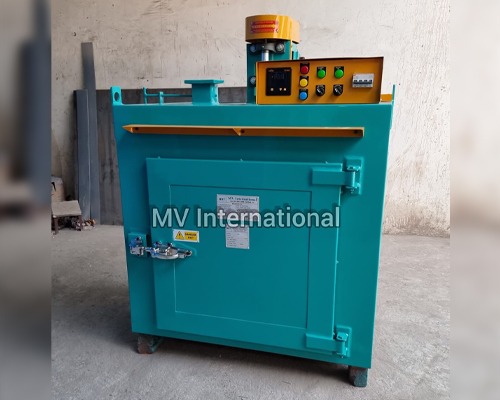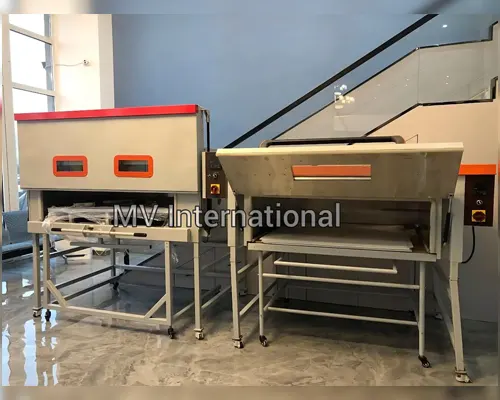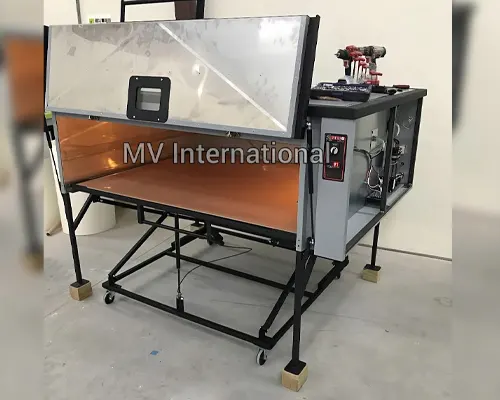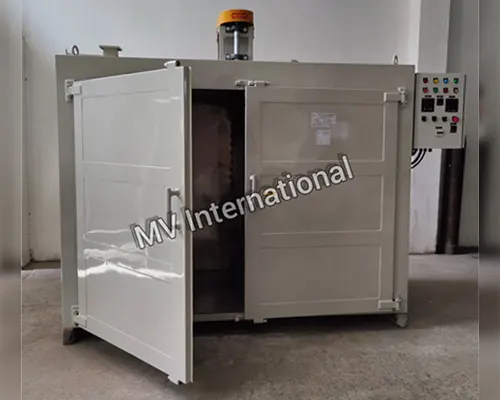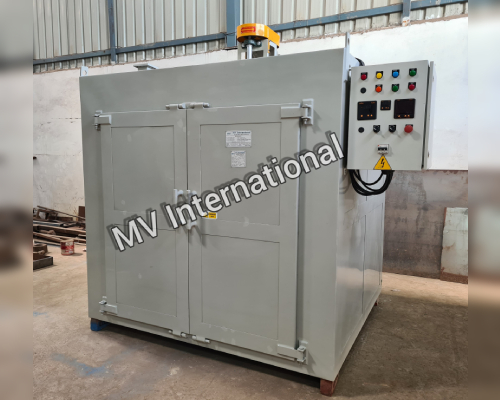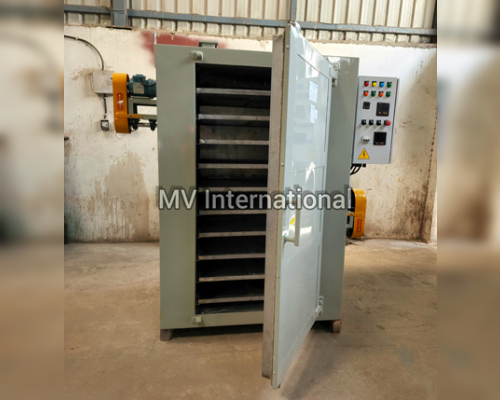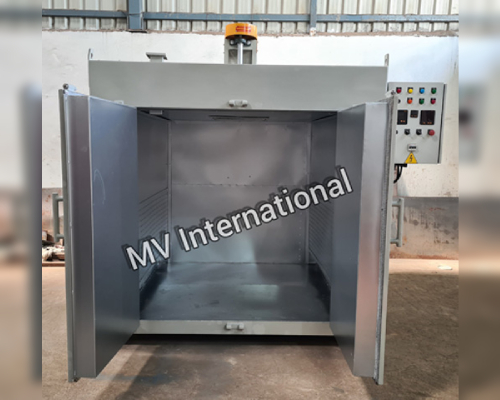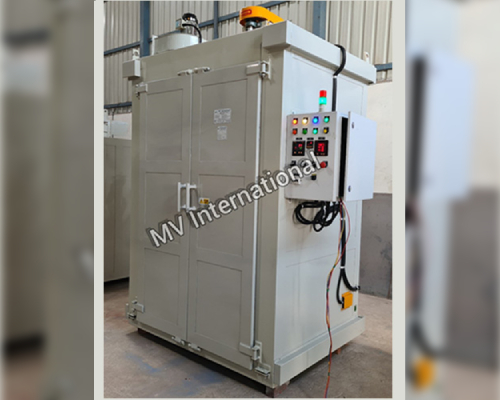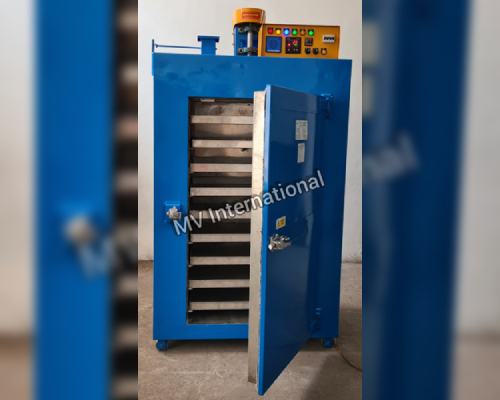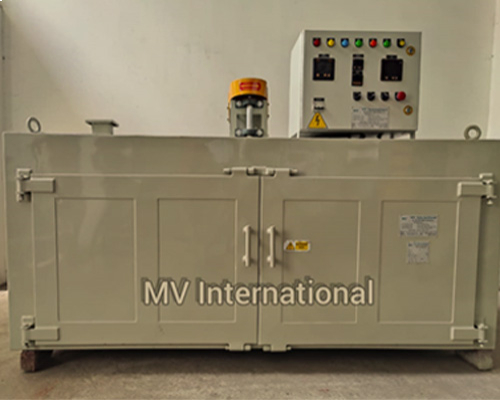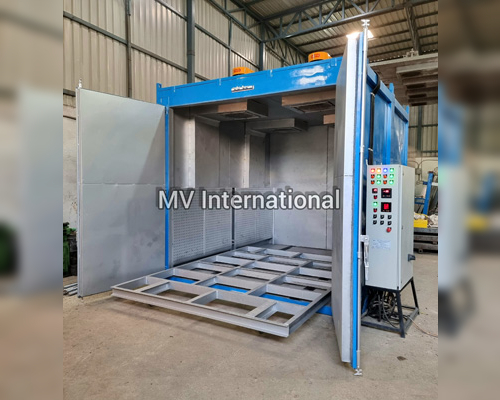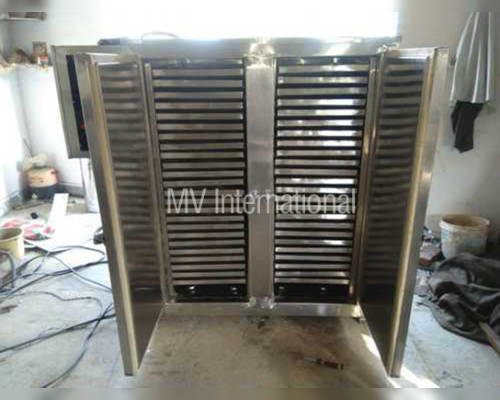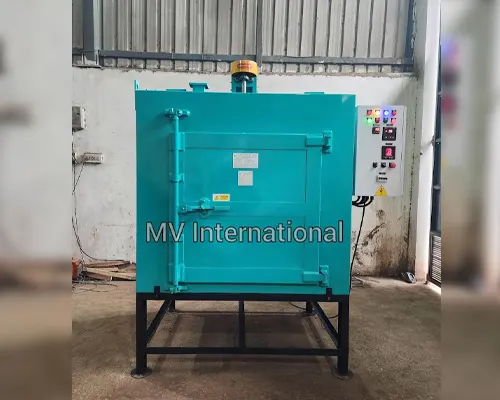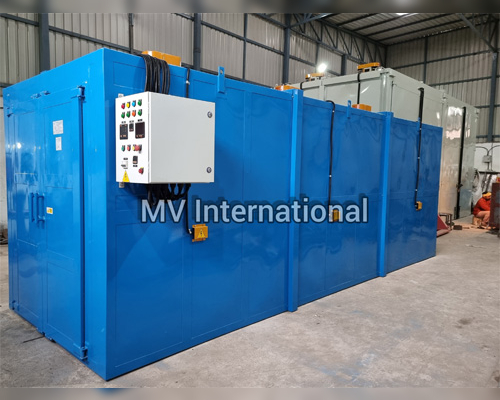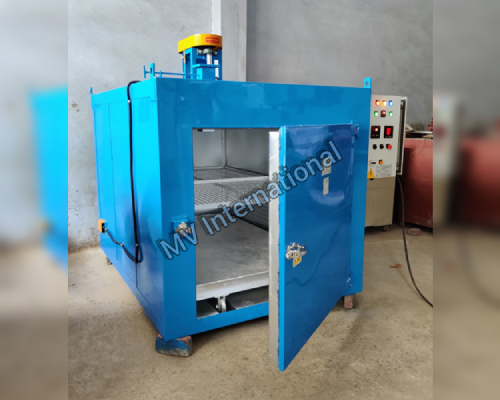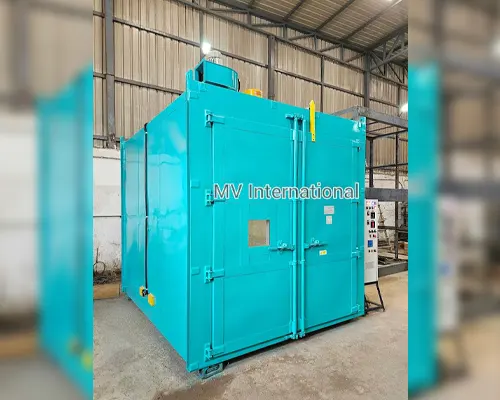
In a factory setting, quality is rarely shaped at the final inspection table. It is formed much earlier, during quiet stages where materials are allowed to behave as they should. Drying is one such stage. It does not draw attention, yet it carries long-term consequences for strength, finish, and service life. At MV International, industrial drying ovens are approached as controlled environments rather than heating boxes. As an industrial manufacturer and exporter, our work sits between practical production realities and disciplined process control. Here, we explain how drying ovens influence product quality in ways that operators notice only when something goes wrong.
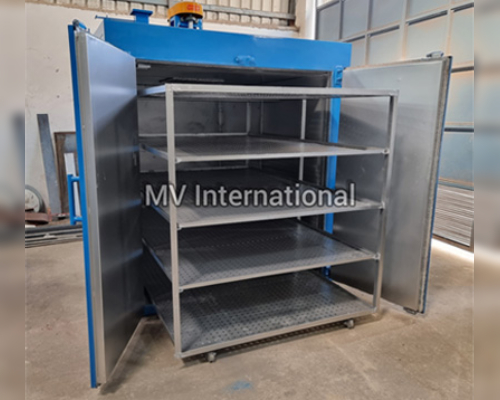
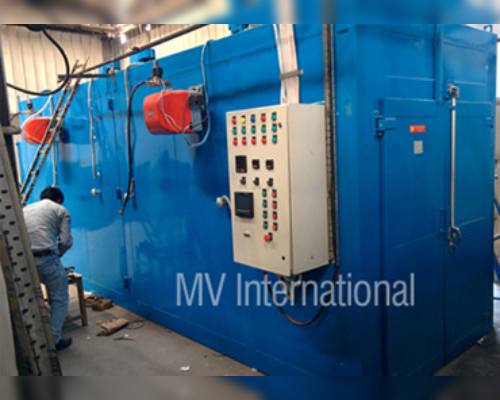
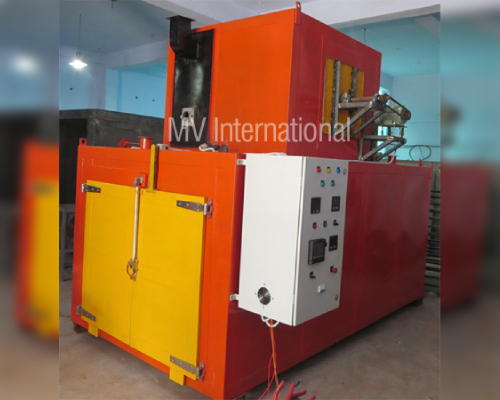
Industrial drying ovens are sealed systems used to remove moisture from products under planned thermal conditions. Their value lies in consistency rather than speed.
Manufactured components often carry moisture from washing, coating, bonding, or forming stages. If this moisture leaves unevenly, it alters surface behaviour and internal stability. Drying ovens manage heat, air movement, and time so moisture exits gradually and uniformly. This allows manufacturers to rely on repeatable outcomes across production shifts, seasonal weather changes, and export-bound orders where tolerance margins are strict.
Drying affects how a product behaves long after it leaves the factory. Materials remember how they were treated during heat exposure.
When drying conditions are balanced, coatings cure evenly, metals retain shape, and composites hold structure. When conditions fluctuate, stress builds quietly within the material. That stress later shows as peeling, warping, or early fatigue. Industrial drying ovens reduce this risk by maintaining stable internal environments. The result is not visual alone. It is reflected in durability during storage, transport, and real-world use.
Heat is effective only when it remains predictable. Excess heat introduces damage, while weak heat creates hidden moisture pockets.
Our drying ovens focus on controlled heat distribution rather than extreme temperature values. Uniform chamber heating ensures that outer surfaces and internal sections dry together. This balance limits internal tension and supports dimensional accuracy. Manufacturers benefit from lower rejection rates and reduced corrective processing, especially in applications where tolerance deviation leads to batch rejection or compliance issues.
Airflow determines where moisture travels after it leaves the product surface. Poor airflow traps moisture within the chamber.
Our well-designed industrial drying ovens guide air across all exposed surfaces without creating stagnant zones. Balanced circulation prevents overdrying at edges and underdrying at cores. This matters for stacked trays, thick components, and coated assemblies. When airflow performs its role correctly, drying cycles remain consistent, and product appearance stays uniform across full production loads.
MV International develops drying ovens for industrial use around operational stability rather than feature density. Each system reflects how factories actually function.
Structural strength, insulation quality, and thermal reliability receive priority during design. Control interfaces remain straightforward, allowing operators to manage cycles without specialised training. Export-oriented construction ensures performance consistency across varied operating environments. This approach suits clients who value predictable output, reduced downtime, and long-term equipment confidence.
Process stability often determines cost stability. Drying plays a quiet role in this balance.
Industrial drying ovens reduce waste by limiting drying-related defects. Efficient insulation and airflow design help control energy use during extended operating hours. Over time, these factors simplify maintenance planning and reduce unplanned shutdowns. Manufacturers gain operational rhythm rather than short-term savings that fluctuate with usage patterns.
Selection begins with material behaviour rather than catalogue specifications. Moisture sensitivity, load size, and cycle duration define the required drying environment.
Drying ovens must align with production flow, not disrupt it. Access for maintenance, ease of control, and long-term service reliability influence ownership experience. A well-chosen oven integrates quietly into daily operations, supporting output consistency without drawing attention to itself.
How long do industrial drying ovens remain serviceable?
With proper operation and scheduled maintenance, they support long-term industrial use reliably.
Can one oven manage varied product types?
Yes, if airflow and temperature controls allow adjustable drying profiles.
Do drying ovens influence storage performance?
Correct drying improves stability during storage and transport phases.
Are drying ovens difficult to operate?
Most systems are designed for routine operation without complex training.
Does MV International offer application-based designs?
Yes, ovens are configured based on product behaviour and production scale.
Copyright © 2026 MV International. All Rights Reserved.