By Punit Panchal | 28 September 2026
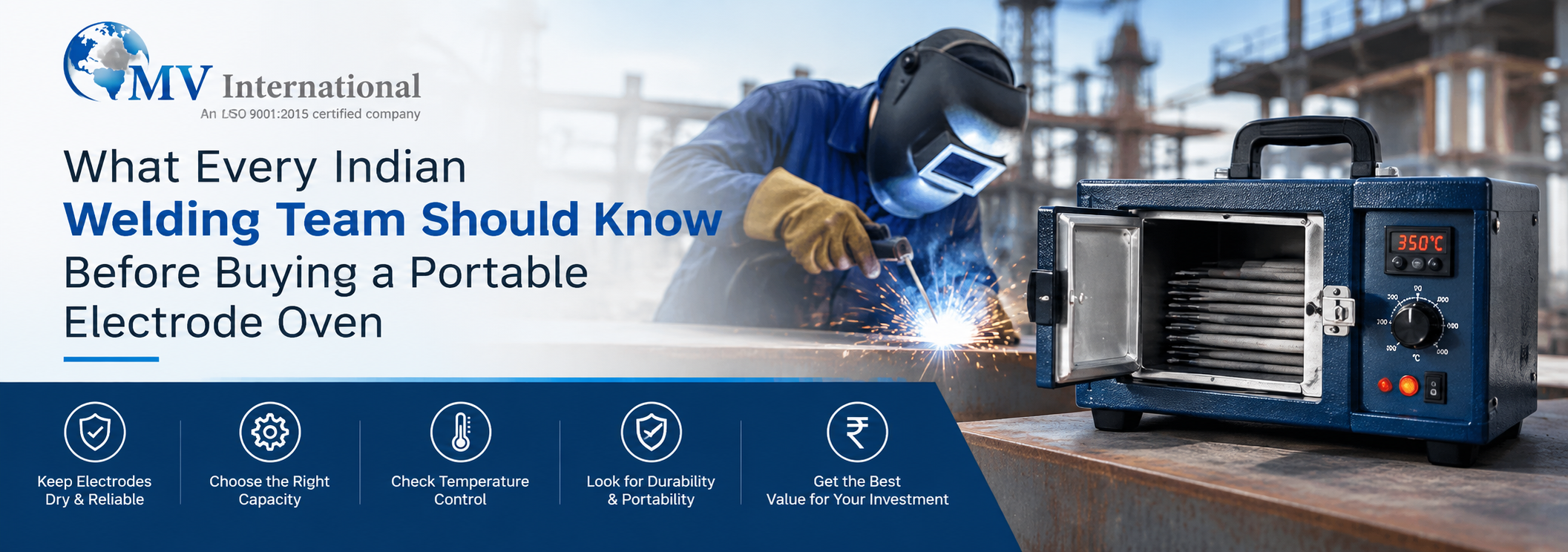
Damp electrodes ruin good welds. Moisture trapped in the flux coating releases hydrogen during welding, and that hydrogen causes porosity, cracking, and rejected joints. For fabrication shops, shipyards, pipeline contractors, and power plants across India, this is a daily concern. The fix is a reliable portable electrode oven that keeps low-hydrogen electrodes dry right up to the moment of use.
A portable welding oven preheats and holds welding electrodes at a controlled temperature so they stay free of moisture during use. Low-hydrogen electrodes typically need 250 to 300°C for at least an hour before welding begins. MV International, a company manufacturing this equipment since 1989, designs its units to carry that heat directly to the point of work.
Key working benefits at the site include:
The specifications that matter are capacity, temperature range, power input, and chamber design. Reputable portable oven suppliers publish these clearly. MV International’s portable welding oven offers a capacity of 5 kg to 20 kg, a temperature range of 50°C to 250°C, and accepts 80 volts DC along with 110 to 230 volts AC input, making it flexible for varied site power conditions.
Points worth checking before you commit:
Chamber shape directly affects whether flux chips off the electrodes. In square chambers, electrodes roll against flat corners and the brittle flux coating cracks. MV International builds the internal chamber in a cylindrical shape, which checks flux chipping and holds electrodes securely. Stable inner temperature and improved insulation add to the protection, keeping each rod usable rather than wasted.
This design detail separates thoughtful portable oven manufacturers from those selling generic boxes. A cracked flux coating exposes the core wire and defeats the entire purpose of drying, so the geometry of the chamber is not a minor point. It protects your consumable stock and your weld integrity together.
A shop should pick a digital portable oven when the application demands precise, displayed temperature control. Some heat-processing tasks tolerate simple heating, while others need tight accuracy. MV International’s digital portable oven runs across a 50°C to 200°C range with a digital controller accurate to plus or minus 3 degrees, giving operators exact readings rather than guesswork.
Consider the digital route if:
MV International stands out through decades of specialised manufacturing and a wide delivery network. The company is ISO 9001:2008 certified, carries over 30 years of experience, and has served more than 1800 satisfied clients. As one of the established portable oven exporters from India, it ships to more than 50 countries while manufacturing from its base in Bahadurgarh, Haryana.
What this track record means for an Indian buyer:
You extend service life by matching the oven to your load, respecting the heating cycle, and handling it with basic care. Overloading beyond rated capacity strains the heating elements, and skipping the recommended preheat time wastes both electricity and electrodes. Treat the unit as precision equipment, not a rough site accessory, and it rewards you across years of daily use.
Practical habits that protect your investment:
For an Indian fabrication team weighing quality against cost, the sensible move is to speak directly with a manufacturer that builds these units in-house and can tailor capacity, controls, and temperature range to your exact welding procedure. MV International’s Bahadurgarh facility and its enquiry line at +91 9718290000 put that conversation one call away, before your next batch of electrodes ever risks picking up moisture.
Copyright © 2026 MV International. All Rights Reserved.