
By MV International | 15 July 2026
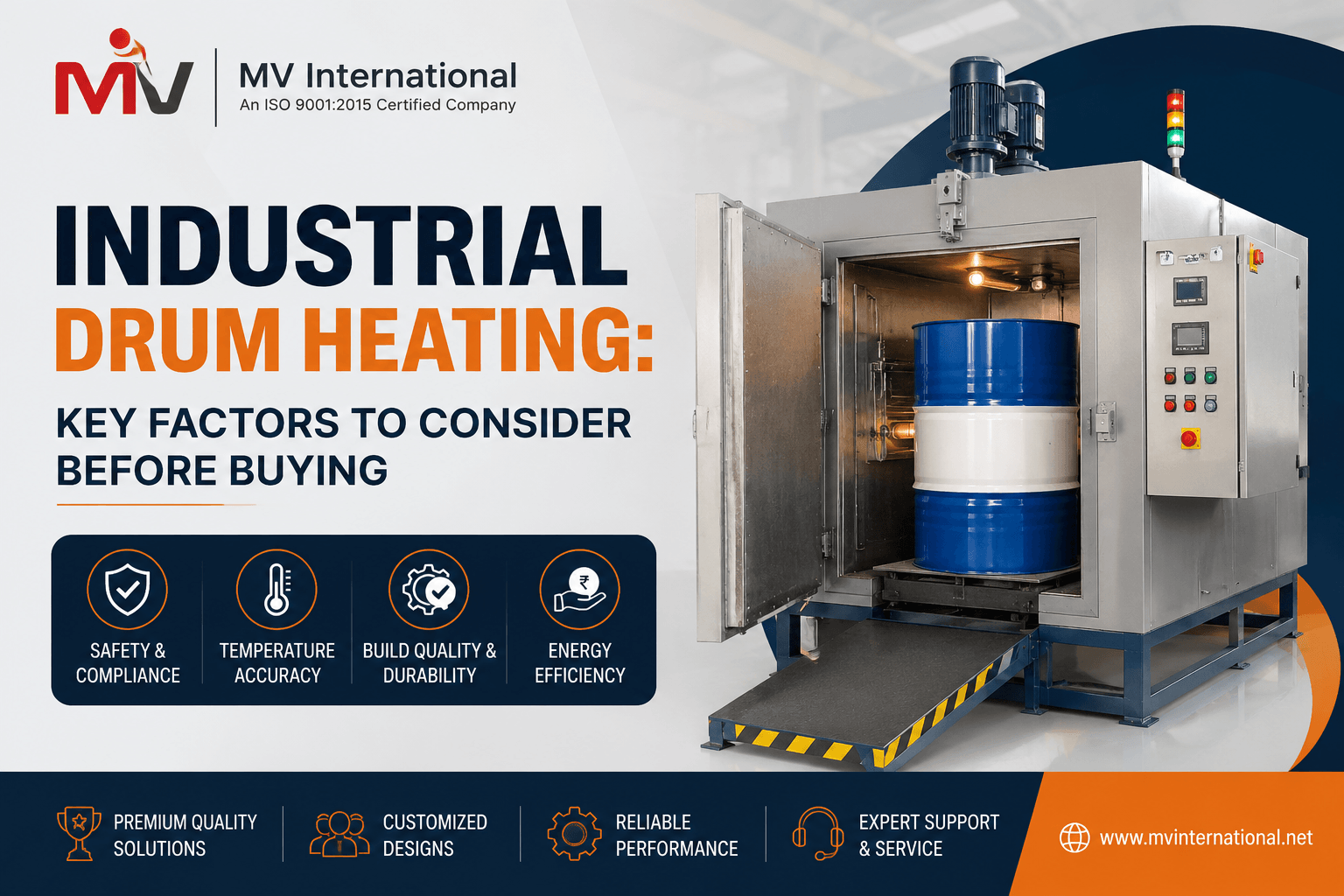
Maintaining the correct temperature of stored industrial liquids is crucial for many manufacturing processes. Fluids such as chemicals, oils, and resins can change viscosity if left in cold environments. Inefficient fluid transfer leads to slowed production and increased mechanical wear on factory pumps. Investing in a reliable drum heating oven resolves this issue by providing consistent, controlled heat. At MV International, we manufacture high-quality heating solutions designed for diverse applications. When selecting the right heating equipment, there are several key factors you must consider.
Before purchasing a heater, you must evaluate the containers you currently use. Standard 200-litre containers are the backbone of bulk storage, but their varying compositions demand tailored heating approaches. Industrial drums are typically made from either steel or plastic. Applying intense heat to a plastic container can cause structural damage or melting. Conversely, steel drums can withstand higher temperatures and often require more aggressive heating to alter the state of dense materials inside.
Table 1: Drum Material and Heating Guidelines
| Drum Material | Heat Tolerance | Recommended Heater Type |
| Steel | High | Base heaters, high-wattage band heaters |
| Plastic / Poly | Low to Medium | Full-coverage heating jackets |
| Fibre | Low | Low-wattage insulated jackets |
The primary goal of drum heating is to reduce fluid viscosity or prevent freezing. Viscosity refers to a fluid’s resistance to flow. As temperatures drop, viscosity increases, turning manageable liquids into thick gels. You need to know the specific temperature required to achieve the desired flow rate for your stored materials. Certain chemicals require precise temperature control to prevent spoiling. Meanwhile, food processing ingredients need gentle, uniform heating to avoid scorching. Ensure the heater you select features an accurate thermostat to maintain stability.
Table 2: Common Industry Temperature Requirements
| Industry | Typical Material | Target Temperature Range |
| Food Processing | Syrups, oils, fats | 30°C to 50°C |
| Chemical | Resins, adhesives | 40°C to 80°C |
| Heavy Manufacturing | Dense lubricants | 50°C to 90°C |
Different operational setups require different heating methods. Selecting the correct style improves energy efficiency and accelerates your production line.
Table 3: Heater Style Comparison
| Heater Style | Primary Benefit | Best Application |
| Heating Jacket | Energy efficiency, even heat | Temperature maintenance |
| Band Heater | Rapid heat transfer | Heavy-duty steel drums |
| Base Heater | Bottom-up melting | Solids and thick sludges |
The location where you plan to heat the drums dictates the safety features your equipment must possess. If your facility handles flammable gases or combustible dust, you must choose heaters certified for hazardous areas. Standard heaters can pose a severe ignition risk in these environments. Always verify that the equipment meets necessary industrial standards for your region, such as ATEX certifications in Europe. Additionally, if the heating takes place in draughty warehouses, choosing options with superior thermal insulation will minimise heat loss and reduce electricity consumption.
Choosing the correct industrial drum heating oven will optimise your workflow, protect your raw materials, and ensure workplace safety. By evaluating your drum material, required temperatures, preferred heater style, and environmental conditions, you can make a highly informed purchasing decision. Our team at MV International understands these complex thermal dynamics and provides expertly engineered solutions tailored to meet your precise industrial demands.
No. Heaters designed for steel drums often reach temperatures that will melt or severely weaken plastic. You must always use a heater specifically rated for plastic or poly materials. These models typically feature lower maximum temperature limits and more sensitive temperature control mechanisms.
The required time depends entirely on the initial temperature of the liquid, your target temperature, the wattage of the heating unit, and the specific heat capacity of the fluid. Combining a full-coverage heating jacket with a base heater will yield the fastest results.
Yes, provided you are using high-quality equipment equipped with built-in thermostats and thermal cut-off switches. These safety features automatically suspend the heating process once the desired temperature is reached, effectively preventing overheating and fire risks.
Copyright © 2026 MV International. All Rights Reserved.