By MV International | 24 March 2026
Modern manufacturing requires finishes that endure harsh environments without failing. Industries are constantly evaluating surface treatments to find the most durable solution for metal components. When evaluating these options, understanding the role of a powder coating oven is crucial. This equipment transforms dry powder into a solid, impenetrable layer through thermal curing. The transition from wet solvent paints to dry powder application represents a significant shift in industrial finishing. We will explore the technical differences and operational benefits that make this dry finishing process highly effective for long-term applications.
The fundamental difference lies in the application and curing methods. Wet paint relies on solvents to keep the binder and filler parts in a liquid form. These solvents evaporate as the paint dries, which often releases volatile organic compounds into the atmosphere. Conversely, the dry method uses electrostatic attraction to apply dry powder to a grounded metal part. When transitioning between these systems, consulting a reliable Industrial oven Manufacturer helps facility managers understand the necessary infrastructure changes to support dry finishes.
| Feature | Traditional Wet Paint | Dry Powder Application |
|---|---|---|
| State | Liquid suspension | Dry electrostatically charged particles |
| Curing Method | Air evaporation | Thermal cross-linking |
| Environmental Impact | High solvent emissions | Minimal volatile organic compounds |
| Finish Durability | Prone to chipping | Highly resistant to impact |
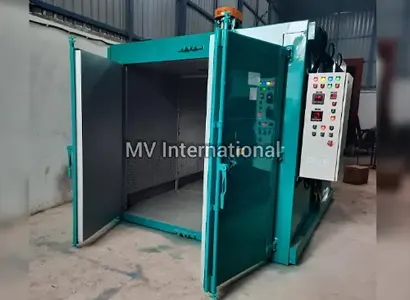
The curing stage determines the final strength of the surface finish. Once the metal component receives the electrostatically charged particles, it enters the heating chamber. The internal temperature must remain absolutely uniform to ensure the particles melt, flow, and cross-link correctly. Uneven heating leads to defects such as orange peel or incomplete adhesion.
A competent Industrial oven Manufacturer engineers these heating chambers with precise airflow management. They design the internal ducting to eliminate cold spots, ensuring that every geometrical angle of the metal part receives the exact thermal energy required for a flawless coat.
Liquid finishes require lengthy drying periods between coats. This waiting period consumes valuable factory floor space and delays production schedules. Dry surface treatments eliminate this waiting period entirely.
The metal parts are ready for assembly or packaging the moment they cool down after exiting the heating chamber. This rapid turnaround is a primary reason production facilities upgrade their finishing lines. A dedicated powder coating oven manages this thermal processing cycle efficiently. The rapid heat transfer accelerates the polymerisation process, turning the dry dust into a solid plastic-like shell in minutes rather than hours.
Investing in thermal processing equipment requires careful consideration of the structural integrity. The heating chambers endure extreme temperatures daily, which can warp inferior materials. Heavy-duty construction ensures the chamber withstands continuous industrial use without structural fatigue.
At MV International, we build robust thermal processing solutions tailored for high-volume manufacturing environments. Every unit is engineered with heavy-gauge steel and superior insulation to maintain performance over decades of operation. Partnering with a proven Industrial oven Manufacturer ensures your production line remains active and reliable. Quality engineering reduces maintenance requirements and prevents unexpected downtime.
Energy consumption is a significant factor in surface finishing operations. Older heating systems often waste energy through poor insulation or inefficient burner designs. Upgrading to a modern powder coating oven directly impacts the bottom line by optimising fuel usage.
Advanced combustion systems provide rapid heat-up times, which means the equipment consumes less fuel to reach the operating temperature. Variable frequency drives on the circulation fans adjust the motor speed based on the load, further reducing electrical consumption. These technical improvements lower the cost per cured part, making the entire finishing operation financially efficient over its lifespan.
Selecting the correct thermal processing equipment significantly influences your daily operations and product quality. Evaluating your specific production requirements is a practical first step. If you are reviewing your surface finishing capabilities, exploring the custom-engineered systems developed by MV International provides a reliable path forward.
Can dry finishing be applied to non-metal surfaces?
The process requires the part to conduct an electrical charge and withstand high curing temperatures. It is primarily used for metals, though some specialised applications exist for certain plastics and glass.
Does the thermal process require special ventilation?
The heating chambers do require proper exhaust systems to remove combustion byproducts. However, they emit significantly fewer volatile organic compounds compared to wet solvent evaporation.
How do you control the thickness of the final finish?
Operators adjust the voltage on the application gun and modify the time the part spends in the thermal chamber. These adjustments dictate the final thickness and texture of the cured layer.
Is it difficult to change colours during production?
Changing colours requires cleaning the application booth and the delivery hoses. Dedicated recovery systems make this cleaning process straightforward and prevent cross-contamination between different batches.
Copyright © 2026 MV International. All Rights Reserved.