By MV International | 10 June 2026
An electric motor drying oven solves the hidden problems that factory floor managers face when heavy machinery stops working because of moisture. It’s common when a major production line goes cold and financial losses start growing by the minute. You need a sensible solution to protect your industrial equipment before dampness destroys the internal insulation completely. Our engineering team at MV International believes that supporting your plant workforce with simple guidance is much better than selling items through aggressive marketing pitches. Let us study how correct thermal processing extends machine life and keeps your everyday business operations running smoothly.
Moisture slowly destroys industrial electric motors by degrading the delicate insulation material wrapper around the copper coils over time. When a factory cools down during weekend shutdowns, water droplets from regular humid air settle inside the cold machine housings. This dampness creates small electrical paths that cause sudden short circuits when operators turn the main power switches back on.
| Moisture Damage Phase | Physical Effect on Motor | Expected Operational Risk | Required Technical Solution | Lifespan Impact |
| 1. Humid Air Entry | Dampness gathers on coils | Small tracking currents | Regular insulation testing | Minor insulation wear |
| 2. Deep Water Soak | Core insulation gets soft | Sudden earth faults | Controlled heated air drying | Major component damage |
| 3. Complete Rusting | Metal components corrode | Total machinery burnout | Heavy industrial coil baking | Total equipment failure |
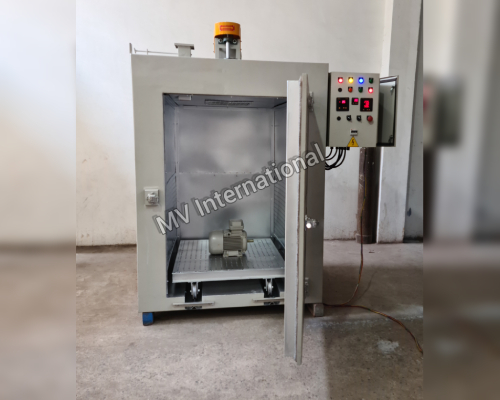
Using a professional electric motor drying oven ensures that dry, warm air flows evenly through every hidden layer of the internal motor parts. MV International builds heavy duty industrial heating systems that carefully remove moisture without causing thermal shock to the sensitive copper wiring.
A reliable motor winding baking oven plays a vital role by curing protective varnishes and drying out thick copper coils after repair work. This specialised thermal treatment hardens the liquid insulation resin into a solid protective barrier that resists dust and chemicals.
You can trust our simple, time-tested manufacturing experience at MV International to deliver consistent heating results for your workshop floor.
Industrial workshops must use an electric motor drying oven whenever an emergency flood happens or when machinery stays idle during rainy seasons. Testing with a standard insulation resistance meter will show you exactly when the internal copper coils have absorbed too much water.
| Industrial Situation | Current Winding State | Immediate Action Plan | Recommended Oven Setting | Final Safety Outcome |
| Post Flood Emergency | Completely soaked parts | Wash away mud first | Low heat drying cycle | Salvages expensive machinery |
| Rainy Season Storage | High surface dampness | Pre-heating before usage | Moderate temperature cure | Prevents initial startup sparks |
| Annual Factory Service | Normal industrial grime | Clean and coat varnish | High temperature hard bake | Extends long term usage |
Protecting your heavy industrial assets requires intelligent engineering choices that distribute thermal energy softly and evenly across large steel surfaces. A modern motor winding baking oven uses heavy motor-driven fans to push heated air through complex internal duct networks continuously.
If you want to understand how our balanced heating equipment fits into your regular workshop layout, please contact MV International for practical advice. Our technical support team loves answering honest engineering questions without pushing hard sales contracts onto your busy manufacturing company.
Q1. How does an Industrial Motor Drying Solution remove deep moisture?
The machine circulates warm, dry air at controlled temperatures to evaporate trapped water molecules from deep inside the tightly wrapped copper wire insulation layers safely.
Q2. What temperature is safe for a Motor Winding Curing System?
Most standard insulation materials require steady temperatures between 100°C and 130°C to cure varnish or remove moisture safely without damaging fragile component parts.
Q3. Can we dry high voltage and low voltage motors together?
Yes, you can place different industrial components inside the heating chamber together if they require identical temperature levels and baking time cycles for processing.
Q4. How many hours does a typical coil baking cycle take?
The processing time usually varies from 8 to 24 hours depending entirely on the total thickness of the copper wire structure and moisture levels.
Q5. Why should factories choose MV International heating equipment?
MV International manufactures simple, long lasting industrial ovens that focus on high energy efficiency and straightforward controls for common factory workers across India.
Copyright © 2026 MV International. All Rights Reserved.