

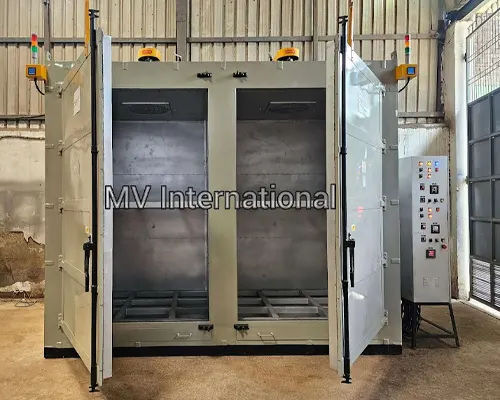
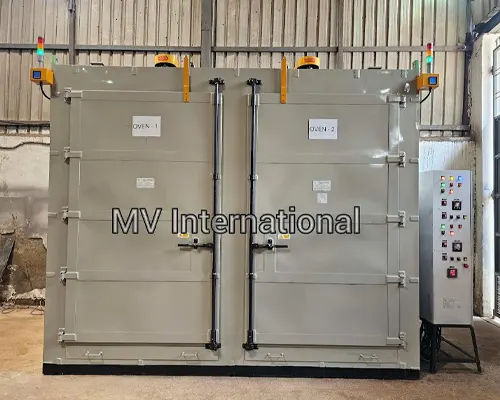
A renowned barrel heating oven manufacturer delivers precision-engineered thermal solutions designed to tackle the toughest material handling challenges in the industry. Handling viscous materials such as bitumen, heavy oils, waxes, paints, and gelatin requires more than just heat; it requires controlled, uniform thermal energy to ensure contents are liquefied or thinned without degrading their quality. Our barrel heating ovens are the industry standard for safely reducing viscosity, allowing for easy pumping, pouring, and processing of temperature-sensitive substances.
As a dedicated barrel heating oven manufacturer, we focus on solving the operational bottlenecks caused by solidified or thick raw materials. In cold environments or simply due to the nature of certain chemicals, getting product out of a drum can be slow and wasteful. Our ovens are designed to eliminate this waste. By utilizing high-grade heating elements and a forced air circulation system, we ensure that heat permeates the barrel evenly from all sides. This prevents the common issue of localized overheating or “charring” of the material near the heat source while the center remains solid.
Our construction standards set us apart. We build our ovens using heavy-gauge mild steel or stainless steel, reinforced to handle the weight of multiple fully loaded drums. To ensure maximum energy retention, the double-walled construction is packed with high-density mineral wool insulation. This design keeps the heat inside the chamber where it belongs, ensuring that your energy bills remain low even during extended heating cycles.
Different materials have different melting points and thermal limits. Our barrel heating ovens are equipped with sophisticated digital PID temperature controllers and timers, giving operators the ability to set precise heating profiles. Whether you need to gently warm honey or rapidly melt industrial wax, our systems provide the flexibility required. Safety is paramount, especially when heating volatile substances. Our units can be customized with explosion-relief panels and flameproof electrical components for use in hazardous zones.
Our expertise in thermal dynamics extends far beyond fluid management. The same engineering precision that guarantees the safety of our barrel ovens is applied across our entire product range. For clients in the electrical engineering sector, specifically those involved in motor manufacturing and repair, we offer high-performance solutions for component preparation. This includes our armature drying oven, which is critical for removing moisture from motor windings before impregnation.
Similarly, ensuring that electrical motors are properly cured and maintained is vital for industrial uptime. Our motor heating oven is designed to provide the exact thermal environment needed to cure varnishes and resins on stators and rotors. By leveraging the same advanced airflow and temperature control technologies found in our barrel ovens, we ensure that every piece of equipment we manufacture—whether for fluids or solids—delivers consistent, reliable results.
Don’t let viscous materials slow down your production line. As a leading barrel heating oven manufacturer, MV International has the technology and expertise to streamline your material handling processes. Contact us today to discuss your specific capacity needs and temperature requirements, and let us build a solution that enhances your operational efficiency.
A barrel heating oven is an industrial heating system designed to heat materials stored in barrels or drums in a controlled and uniform manner. It is commonly used to reduce the viscosity of thick or solidified materials such as bitumen, heavy oils, waxes, paints, resins, adhesives, and other temperature-sensitive substances, making them easier to pump, pour, transfer, or process.
A barrel heating oven uses heating elements and a forced-air circulation system to distribute heat evenly around the barrels placed inside an insulated chamber. The controlled airflow helps transfer heat uniformly from all sides, reducing localized overheating and allowing the material to gradually reach the required processing temperature.
Barrel heating ovens can be used for viscous and temperature-sensitive materials such as bitumen, heavy oils, waxes, paints, resins, adhesives, lubricants, and other industrial compounds. The appropriate heating temperature and configuration depend on the material’s viscosity, melting point, flash point, and processing requirements.
A barrel heating oven and a drum heating oven perform similar industrial heating functions and are often used for heating materials stored in large containers. The main difference may be the terminology used for the container size, shape, or application. The oven itself can be customized according to the barrel or drum dimensions, required capacity, temperature range, and heating process.
Uniform heating helps ensure that the material reaches the required temperature consistently throughout the barrel. It reduces the risk of localized overheating, scorching, or degradation near the heat source while the material in the center remains cold or solid. This helps maintain material quality and improves pumping, pouring, and processing efficiency.
The required temperature range depends on the material and application. Barrel heating ovens can be designed for controlled heating according to the material’s melting point, viscosity, and thermal sensitivity. The exact operating temperature should be selected based on the process requirements and the characteristics of the material being heated.
Yes. Barrel heating ovens are particularly suitable for high-viscosity materials that become difficult to pump, pour, or process at lower temperatures. Controlled heating can reduce viscosity and improve the flow characteristics of materials such as heavy oils, bitumen, waxes, resins, and adhesives.
The oven uses forced-air circulation to distribute heat evenly throughout the chamber and around the barrels. Combined with controlled heating elements and PID temperature control, this helps minimize hot spots and reduces the risk of charring or overheating the material near the heating source.
Depending on the application and facility requirements, barrel heating ovens can be designed with different heating systems, including electric, steam, gas, diesel, or thermic oil heating. The most suitable heating method depends on the required temperature, heating capacity, available utilities, energy costs, and process requirements.
Yes. Barrel heating ovens can be equipped with digital PID temperature controllers and timers for accurate temperature management. These controls allow operators to maintain the required heating profile and can help ensure repeatable results when processing materials with specific thermal requirements.
Yes, but hazardous or flammable materials require an appropriately designed safety configuration. Depending on the material’s flash point and hazardous-area classification, the oven may be customized with flameproof electrical components and explosion-relief systems. The material safety information and operating environment should be evaluated before selecting the equipment.
Yes. Barrel heating ovens can be customized according to the number and dimensions of barrels, required chamber size, heating capacity, temperature requirements, airflow arrangement, and factory layout. Customization helps ensure the equipment fits the production process and available floor space.
High-density insulation and double-wall construction help retain heat inside the chamber and reduce heat loss to the surrounding environment. This can improve energy efficiency, maintain more stable operating temperatures, and help protect operators from excessive external surface temperatures.
Barrel heating ovens are useful across industries that handle viscous, solidified, or temperature-sensitive materials. Applications can include chemical processing, paints and coatings, adhesives and resins, lubricants, bitumen processing, petroleum-related industries, and other manufacturing operations where materials need controlled heating before pumping, pouring, or further processing.
The right barrel heating oven should be selected based on the material type, required temperature, barrel dimensions, number of barrels per batch, heating time, required throughput, heating method, airflow requirements, safety classification, available utilities, and factory floor space. Sharing these details with the manufacturer helps ensure the oven is correctly designed for the application.
Copyright © 2026 MV International. All Rights Reserved.
