

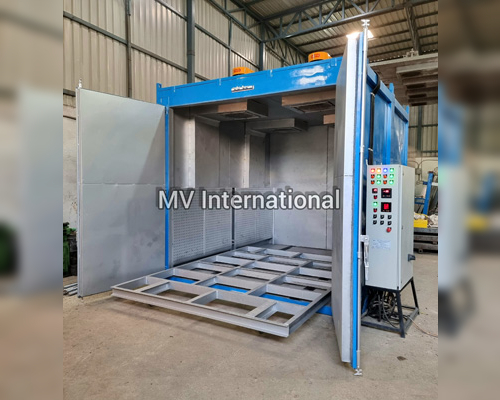
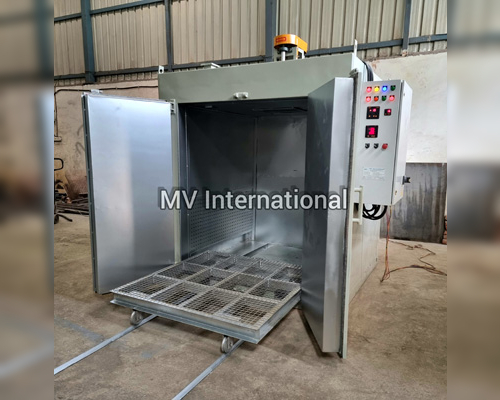
An electric oven for HT LT motors has controlled heat that determines insulation life. Industry data shows curing errors reduce motor efficiency by nearly 12% within the first operating year. An electric oven for HT LT motors works inside a narrow band, often between 80°C and 180°C, where varnish bonding stabilizes and moisture exits evenly. One uneven cycle can affect dozens of motors in a single batch. That reality shaped how modern electric ovens are designed, tested, and used on shop floors that handle high tension and low tension motors daily. MV International builds systems around this working truth.
Repair shops use an electric oven for HT LT motors to dry and cure windings after rewinding or insulation treatment. Electric heating gives steady temperature rise and consistent airflow. This matters because HT and LT motors differ in insulation thickness and thermal tolerance. Uniform heat avoids partial curing, which often leads to early insulation breakdown. The process supports predictable results across repeated cycles, even when motor sizes vary within a batch.
Temperature control relies on zoned electric heaters and calibrated sensors placed across the chamber. Airflow is guided through ducts to reach internal winding spaces, not only motor surfaces. An electric oven for HT LT motors uses controlled circulation to prevent hot spots and uneven drying. Operators can hold set temperatures for long durations without fuel fluctuations. This stability is essential when curing varnish layers that react differently to rapid heat changes.
An electric oven for HT LT motors fits between winding completion and final testing. It becomes a scheduling anchor on the shop floor. Many facilities plan workloads around oven capacity and cycle duration. MV International designs ovens that align with real repair timelines, not idealized cycles. The equipment supports batch processing without forcing operators to rush heating or cooling phases.
Only one area benefits from a structured checklist, because small details define performance over years of use.
These points influence consistency, maintenance load, and operator confidence during long curing cycles.
Yes. Electric ovens for HT LT motors reduce on-site emissions and simplify compliance with internal safety standards. Insulated panels limit external heat exposure. Interlocks prevent door opening during active cycles. MV International integrates these features as operational requirements, not optional extras, because safety lapses often begin with thermal equipment.
If your team is reviewing process upgrades or replacing aging thermal systems, a conversation can help align technical needs with practical operation. The right equipment usually reveals itself through measured discussion and clear constraints.
What temperature range does an electric oven for HT LT motors typically support?
It maintains uniform temperatures up to 200°C, supporting safe insulation drying for high tension and low tension motors during rewinding.
Why choose an electric oven for HT LT motors over fuel-based ovens?
Electric heating allows precise control, lower maintenance, and cleaner operation compared to fuel systems used in industrial ovens worldwide today.
How do I size an electric oven for HT LT motor repair work?
Batch size, motor dimensions, temperature range, airflow design, and safety interlocks determine correct electric oven selection for HT LT motors.
How long is a typical curing cycle in an electric oven for HT LT motors?
A standard cycle lasts eight to twelve hours, depending on winding mass, moisture content, and specified curing temperature requirements defined.
What safety features are expected in an electric oven for HT LT motors?
Well-designed electric ovens include insulated panels, controlled airflow, alarms, and shutdown systems to protect motors and operators during thermal processes.
What is an electric oven for HT/LT motors used for?
It is used for drying, baking, curing, and moisture removal in high-tension and low-tension motors.
Why is drying important for HT and LT motors?
Drying removes moisture trapped in motor windings and insulation systems, helping prevent insulation failure and reduced efficiency.
What temperature range does an electric oven for HT/LT motors operate at?
Most electric ovens for HT/LT motors operate between 80°C and 250°C depending on the application.
Can an electric oven handle both HT and LT motors?
Yes. Electric ovens can be designed to accommodate both HT and LT motors with customized chamber sizes and controls.
How does an electric oven ensure uniform drying of motor windings?
It uses forced air circulation and precise temperature control systems to distribute heat evenly.
Which industries use electric ovens for HT/LT motors?
Motor manufacturing plants, motor rewinding workshops, electrical equipment manufacturers, power generation facilities, and industrial repair units.
What are the benefits of using an electric oven for HT/LT motors?
Benefits include improved insulation resistance, faster drying cycles, reduced motor failure rates, and enhanced reliability.
Can the electric oven be customized for specific motor sizes?
Yes. These ovens can be customized with specific chamber dimensions, loading arrangements, and automation features.
What safety features are available in electric ovens for HT/LT motors?
Common features include over-temperature protection, door interlocking systems, emergency shut-off controls, and alarm systems.
Why choose MV International for electric ovens for HT/LT motors?
MV International manufactures customized ovens with precise temperature control, uniform airflow, and energy-efficient operation.
| Size of the working chamber | As per client requirement. |
| Material of construction | Mild Steel, Stainless Steel 304 / 316 or any. |
| Temperature Range | Ambient to 1500C / 2500C / 4000C / 5000C. |
| Air circulation | Vertical, Horizontal or Combination. High Volume and high Velocity Airflow provides twice the air changes compare to ordinary Industrial Ovens. |
| Timer | Digital Pre-Settable with range up to 0 to 999 Minutes / Seconds |
| Paint | Enamel Paint / Epoxy Coating / Powder Coated. |
| Power supply | 230 Volts Single Phase 50Hz / 60Hz 415 Volts 3 Phase 50Hz / 60Hz |
| Heating Elements | Low wattage Incoloy sheathed heating elements / SS Tubular |
| Insulation | Ceramic Wool / Mineral Wool |
| Door Gasket | Fibre Glass Rope (High Temp) / Silicon Gasket. |
| Heavy Duty Shelves / Trays | Made out of angles with wire knitted mesh or perforated sheet suitable for oven internal size will be provided along with the oven. |
| Exhaust Manual or Automatic | Automatic forced exhaust system with fresh air inlet. Manually adjustable damper with fresh air inlet. |
| Heating Media | Electric / Gas / Diesel / Steam / Thermic OIL etc. |
| Temperature Control | PID with or without Profile Setting (Temp Up and Down) can be provided with SSR/ SCR for high accuracy. The programming of PID can vary from 4 to 50 programmes. |
| Temperature Recorder | Microprocessor chip-based paper less, Multi-Stage Temp. Indicator cum Recorder. |
| PLC With HMI | PLC can be provided for automation and integration of whole system, data feeding, process display, and fault indication can be seen in HMI. |
| SCADA System | High quality integration and controlling system from one point can be done with SCADA. |
| Door | A. Door interlocking system will switch off the blower and the heating system if the oven doors are open
B. Doors on both ends |
| Fumes Outlet | Forced exhaust blower |
| Windows and lights | A. Viewing window B. Interior lights and Access ports for calibration C. Oven on switch- Illuminated D. Heat on switch- Illuminated |
| Timer and Alarm | A. 24/7 timer B. Audible/visual alarm indicators |
Copyright © 2026 MV International. All Rights Reserved.
