

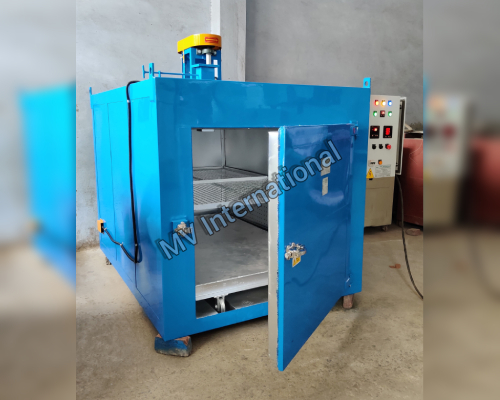
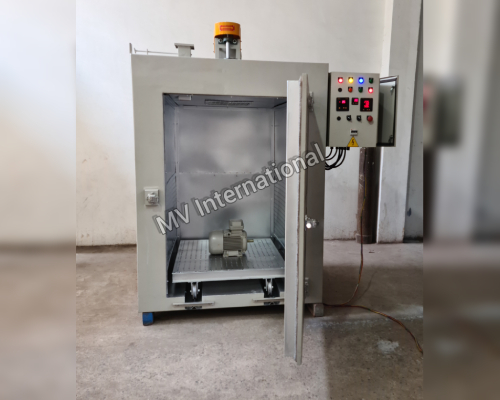
Electric motor drying oven is a widely used heating device used in India and abroad. In motor repair shops across India, controlled heat decides working life. Copper windings hold insulation rated between 130°C and 180°C. A shift of 10°C can cut insulation life by half. Industrial drying ovens now manage airflow within ±2°C tolerance, reducing rework rates by nearly 30% in rewinding facilities. Downtime costs are counted in hours, not days. This is why drying is no longer treated as a waiting step. It is a measured process, tied to temperature, time, and airflow balance. MV International designs systems where these numbers stay predictable, repeatable, and usable on a factory floor.
An electric motor drying oven removes moisture after washing, varnishing, or rewinding. Water trapped inside windings causes insulation failure during load testing. The oven applies controlled heat and airflow to dry motors evenly.
The electric motor drying oven supports repair workshops, OEM service centers, and maintenance units. It helps stabilize insulation resistance before testing and reassembly. The process reduces failure during commissioning and shortens repair cycles.
An electric motor drying oven works on uniform heat circulation. Air movement matters as much as temperature. Uneven airflow leads to hot spots and insulation damage.
Key operating elements usually include:
Only this section uses bullets.
Open heating creates uneven exposure. Motors dry on the surface while moisture stays trapped inside slots. An electric motor drying oven avoids this risk through steady heat penetration.
Controlled drying reduces cracking in varnish layers and prevents copper oxidation. Workshops also gain consistency. Each batch follows the same cycle, which supports quality records and audit checks.
Sizing depends on motor frame size, batch volume, and cycle time. A small repair unit may run one batch per shift. Larger service centers handle multiple loads daily.
An electric motor drying oven must allow spacing between motors for airflow. Oversized chambers waste energy. Undersized chambers slow operations. MV International works with real shop layouts for best benefits.
Maintenance focuses on airflow paths, heaters, and sensors. Filters need cleaning. Fans require inspection. Temperature sensors must stay calibrated.
A stable electric motor drying oven performs for years when routine checks are followed. Breakdowns usually come from ignored airflow restrictions or electrical overloads.
If your operation needs predictable drying without trial cycles, MV International welcomes a practical discussion. The right oven should fit the work, not reshape it. Long-term reliability comes from matching process to purpose.
What temperature range does an electric motor drying oven typically operate at?
Most electric motor drying ovens operate between 80°C and 180°C, depending on insulation class, motor size, and drying duration.
How long does a standard motor drying cycle take in an industrial oven?
A typical electric motor drying oven cycle lasts four to twelve hours, based on moisture level, winding density, and airflow settings.
Can one electric motor drying oven handle different motor sizes?
Yes, adjustable racks and airflow control allow one electric motor drying oven to process varied frame sizes safely.
What safety features are important in an electric motor drying oven?
Essential safety features include temperature limiters, overload protection, emergency shutoffs, and consistent airflow monitoring during operation.
Does an electric motor drying oven reduce motor failure after repair?
Proper drying in an electric motor drying oven improves insulation resistance, reducing early failure risks after motor rewinding and testing.
How does an electric motor drying oven actually work during the repair process?
An electric motor drying oven removes moisture from copper windings and insulation after washing, varnishing, or rewinding. It circulates high-velocity heated air through a sealed chamber to guarantee uniform drying. A blower pushes this air vertically, horizontally, or in a combination pattern to eliminate hot spots. Meanwhile, a PID controller constantly monitors the chamber to maintain a steady temperature, ensuring varnish cures properly without degrading the internal components.
What temperature is required to dry motor windings safely?
MV International designs these ovens to operate from ambient temperatures up to 500°C, though most motor drying applications target a much lower specific band, such as 150°C or 250°C. Standard copper winding insulation is rated between 130°C and 180°C. Maintaining strict tolerance is critical because a minor temperature spike can drastically shorten insulation life. The precision controls keep the heat within ±2°C of your target setting.
Why is forced air circulation so important in a motor drying oven?
Heat alone cannot extract trapped moisture from deep inside dense motor slots. Forced air circulation moves high volumes of heated air across the motor frame and through the internal cavities. This constant velocity ensures moisture is actively carried away through the exhaust system rather than settling back onto the parts. Without proper airflow, the motor’s exterior might appear dry while the interior remains damp, leading to shorts during electrical load testing.
Can this oven handle different motor frame sizes in a single batch?
Yes. You can load various motor sizes simultaneously provided there is adequate spacing for airflow between them. The internal layout utilizes heavy-duty shelves or wire-knitted mesh trays built to support heavy industrial equipment. If your workshop processes massive stators alongside smaller fractional horsepower units, the chamber can be custom-built to match your exact lifting equipment and floor plan.
What heating media options are available besides electric?
While electricity is the most popular choice for precise temperature control, it is not the only option. Facilities with existing utility infrastructure can configure their drying oven to run on gas, diesel, steam, or thermic oil. The right choice depends on your daily batch volume, target temperatures, and local energy costs.
What safety features protect the motors and the operators?
Operator and product safety are integrated directly into the design. Door interlocks automatically cut power to the blower and heaters the moment a chamber door opens. An automated forced exhaust system actively clears any volatile fumes released during the varnish curing phase. To prevent thermal runaway, the PID controller limits maximum heat output, while insulated double walls keep the exterior housing cool to the touch.
How do PLC and SCADA integration improve the drying process?
Adding a Programmable Logic Controller (PLC) with a Human Machine Interface (HMI) allows operators to monitor the entire process, input data, and spot faults from a single digital screen. For larger industrial plants, a SCADA system connects multiple ovens to a central control room. This automation ensures every drying cycle is logged, repeatable, and easily audited for strict quality control standards.
What kind of maintenance does a continuous motor drying oven require?
Routine maintenance is straightforward and mostly visual. Operators must inspect the high-temperature fiberglass or silicone door gaskets regularly to prevent costly heat leaks. Fans and exhaust dampers require occasional checks to ensure airflow remains totally unrestricted. Finally, periodic calibration of the temperature sensors guarantees the PID controller always reads accurately.
How long does a standard motor drying cycle take?
A standard cycle runs anywhere from four to twelve hours. The exact duration depends entirely on the motor size, winding density, and the volume of moisture present. Using the digital pre-settable timer, operators can program specific cycle lengths up to 999 minutes. This allows the oven to run unattended overnight and shut down automatically once the cycle is complete.
What should a workshop look for when buying a new motor drying oven?
Buyers should prioritize airflow design, temperature accuracy, and overall build quality. Verify that the manufacturer uses high-grade ceramic or mineral wool insulation to minimize energy loss. Ensure the digital controller supports your specific temperature profiles and reporting needs. Finally, confirm the chamber size matches your actual daily workload so you do not waste power heating empty space.
| Size of the working chamber | As per client requirement. |
| Material of construction | Mild Steel, Stainless Steel 304 / 316 or any. |
| Temperature Range | Ambient to 1500C / 2500C / 4000C / 5000C. |
| Air circulation | Vertical, Horizontal or Combination. High Volume and high Velocity Airflow provides twice the air changes compare to ordinary Industrial Ovens. |
| Timer | Digital Pre-Settable with range up to 0 to 999 Minutes / Seconds |
| Paint | Enamel Paint / Epoxy Coating / Powder Coated. |
| Power supply | 230 Volts Single Phase 50Hz / 60Hz 415 Volts 3 Phase 50Hz / 60Hz |
| Heating Elements | Low wattage Incoloy sheathed heating elements / SS Tubular |
| Insulation | Ceramic Wool / Mineral Wool |
| Door Gasket | Fibre Glass Rope (High Temp) / Silicon Gasket. |
| Heavy Duty Shelves / Trays | Made out of angles with wire knitted mesh or perforated sheet suitable for oven internal size will be provided along with the oven. |
| Exhaust Manual or Automatic | Automatic forced exhaust system with fresh air inlet. Manually adjustable damper with fresh air inlet. |
| Heating Media | Electric / Gas / Diesel / Steam / Thermic OIL etc. |
| Temperature Control | PID with or without Profile Setting (Temp Up and Down) can be provided with SSR/ SCR for high accuracy. The programming of PID can vary from 4 to 50 programmes. |
| Temperature Recorder | Microprocessor chip-based paper less, Multi-Stage Temp. Indicator cum Recorder. |
| PLC With HMI | PLC can be provided for automation and integration of whole system, data feeding, process display, and fault indication can be seen in HMI. |
| SCADA System | High quality integration and controlling system from one point can be done with SCADA. |
| Door | A. Door interlocking system will switch off the blower and the heating system if the oven doors are open
B. Doors on both ends |
| Fumes Outlet | Forced exhaust blower |
| Windows and lights | A. Viewing window B. Interior lights and Access ports for calibration C. Oven on switch- Illuminated D. Heat on switch- Illuminated |
| Timer and Alarm | A. 24/7 timer B. Audible/visual alarm indicators |
Copyright © 2026 MV International. All Rights Reserved.
