

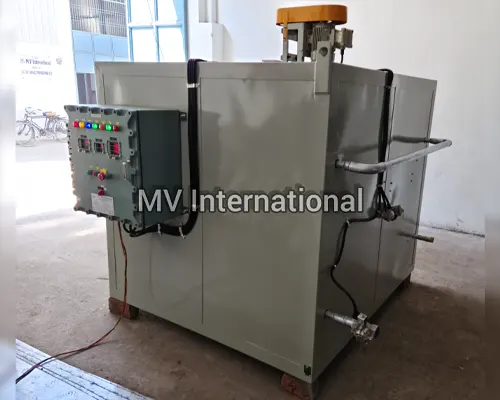
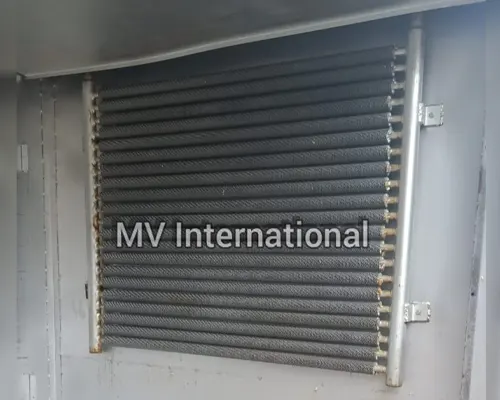
Every year thousands of industrial operations depend on controlled heating to manage viscosity, melting or steady temperature conditions in bulk materials stored in drums. A steam heated drum oven uses steam as a heating medium to deliver uniform heat across one or more drums, keeping content at set temperature levels critical to process consistency. The engineering behind steam heated drum ovens allows reliable operation at controlled temperatures of up to about 200 °C, ideal for many chemical, pharmaceutical and heavy‑industry applications.
A steam heated drum oven heats the contents of metal or industrial drums by circulating steam around them. It reduces viscosity of liquids, melts solids that have solidified and keeps materials at processing temperatures needed in production workflows. These ovens are commonly used where precise heat control is necessary to prepare materials for downstream operations.
The key features that affect performance of a steam heated drum oven include:
These elements ensure the oven maintains set temperature ranges and supports consistent heat treatment.
Plants with boiling, melting or viscosity control needs often specify a steam heated drum oven. Typical sectors include chemical processing facilities, pharmaceutical manufacturers, coating and resin producers, and food handling units. Drum ovens support operations where maintaining or changing material properties through controlled heating is part of quality or manufacturing requirements.
A steam heated drum oven improves process outcomes by delivering controlled, uniform heat that helps:
Steam‑based heating systems are valued in production settings because steam transfers energy efficiently and can keep heat stable across operation runs.
These specifications support various process requirements, whether the priority is throughput, safety or integration with existing steam infrastructure.
MV International provides industrial heat solutions that include robust steam heated drum ovens backed by after‑sales support and service responsiveness.
If you have questions about steam heated drum oven configurations or suitability for your plant conditions, reach out and let us discuss your context. A well‑matched heating solution can clarify next steps in your process planning.
How many drums can a steam heated drum oven handle?
Standard configurations range from one to thirty‑plus drums per batch as required by throughput needs.
Does a steam heated drum oven require special power connections?
Yes. Steam ovens tie into plant steam systems and may need standard industrial electrical feeds for controls.
Can the steam heated drum oven maintain exact temperatures?
Digital or PLC controls allow set temperature control and consistent heat delivery throughout the cycle.
Are steam heated drum ovens safe for volatile materials?
Flameproof models are available where volatile or hazardous contents need controlled heating safety.
What alternatives exist to steam as a heating medium?
Electric and thermic oil options are used where steam infrastructure is unavailable or less suitable.
| Size of the working chamber | As per client requirement. |
| Material of construction | Mild Steel, Stainless Steel 304 / 316 or any. |
| Temperature Range | Ambient to 1500C / 2500C / 4000C / 5000C. |
| Air circulation | Vertical, Horizontal or Combination. High Volume and high Velocity Airflow provides twice the air changes compare to ordinary Industrial Ovens. |
| Timer | Digital Pre-Settable with range up to 0 to 999 Minutes / Seconds |
| Paint | Enamel Paint / Epoxy Coating / Powder Coated. |
| Power supply | 230 Volts Single Phase 50Hz / 60Hz 415 Volts 3 Phase 50Hz / 60Hz |
| Heating Elements | Low wattage Incoloy sheathed heating elements / SS Tubular |
| Insulation | Ceramic Wool / Mineral Wool |
| Door Gasket | Fibre Glass Rope (High Temp) / Silicon Gasket. |
| Heavy Duty Shelves / Trays | Made out of angles with wire knitted mesh or perforated sheet suitable for oven internal size will be provided along with the oven. |
| Exhaust Manual or Automatic | Automatic forced exhaust system with fresh air inlet. Manually adjustable damper with fresh air inlet. |
| Heating Media | Electric / Gas / Diesel / Steam / Thermic OIL etc. |
| Temperature Control | PID with or without Profile Setting (Temp Up and Down) can be provided with SSR/ SCR for high accuracy. The programming of PID can vary from 4 to 50 programmes. |
| Temperature Recorder | Microprocessor chip-based paper less, Multi-Stage Temp. Indicator cum Recorder. |
| PLC With HMI | PLC can be provided for automation and integration of whole system, data feeding, process display, and fault indication can be seen in HMI. |
| SCADA System | High quality integration and controlling system from one point can be done with SCADA. |
| Door | A. Door interlocking system will switch off the blower and the heating system if the oven doors are open
B. Doors on both ends |
| Fumes Outlet | Forced exhaust blower |
| Windows and lights | A. Viewing window B. Interior lights and Access ports for calibration C. Oven on switch- Illuminated D. Heat on switch- Illuminated |
| Timer and Alarm | A. 24/7 timer B. Audible/visual alarm indicators |
Copyright © 2026 MV International. All Rights Reserved.
